Exploring OlmoEarth Embeddings

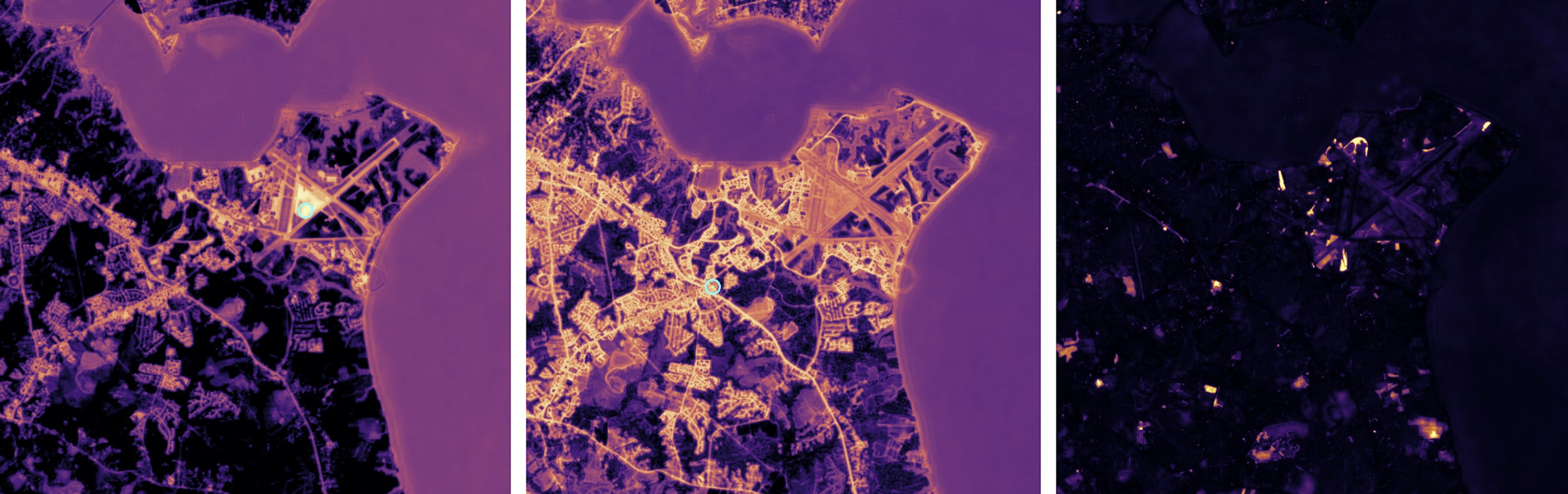
I’ve written before about image similarity with pgvector and the usefulness of embeddings in geospatial workflows. The ability to represent observations as vectors gives us another way to search and compare data. With Earth observation embeddings, that comparison becomes geographic. I can start with a place and look for other places with similar characteristics. Ai2’s … Continue reading Exploring OlmoEarth Embeddings →

Geospatial Infrastructure Should Outlive Its Technology

On August 10, 1846, Congress established the Smithsonian Institution with a simple mission: “the increase and diffusion of knowledge,” and gave it “perpetual succession.” One hundred eighty years later, the Smithsonian is still here, though almost everything about how it carries out that mission has changed. (siarchives.si.edu) The people who established the Smithsonian couldn't have … Continue reading Geospatial Infrastructure Should Outlive Its Technology →

GeoAI and the Soft Middle of the Geospatial Market

My recent essay on the SaaS market argued that AI pressure is unlikely to apply evenly. The exposed segment was products in the middle of the market that are expensive enough to prompt examination, bounded enough to cleanly emulate, and shallow enough in terms of integrations that rebuilding them would not be outrageous. They were … Continue reading GeoAI and the Soft Middle of the Geospatial Market →

Geospatial AI State of Play, April–May 2026

This post summarizes themes that emerged across multiple sources curated by GeoFeeds during April and May 2026. Taken together, these themes suggest that geospatial AI (GeoAI) is moving through a familiar stage in the life of an emerging technology. The early question was whether it could do useful work. The current discussion revolves around what … Continue reading Geospatial AI State of Play, April–May 2026 →