When I started this series, I expected its final post to be a summation of its previous themes and observations. Sometimes, life gets a vote.
As I write this, I find myself in a similar mindset to the one I was in last year. Then, I was a few months past the death of my father that July. The month he passed was momentous for our family in ways both joyful and tragic. After taking a couple of weeks to regroup, I dove right back into a backlog of work that had been awaiting my attention. That kept me fully engaged, and then some, into October. When I finally found space to breathe, I realized I needed to cocoon and I did just that through the end of 2025. I simply did the work that was in front of me and kept close to home through the holidays.
This year, I am about six weeks past the death of my mother, which itself was about six weeks past the wedding of our daughter. Our children are both adults and are launching. Our grandchildren are thriving. There is a lot to be grateful for. I am even fortunate to have made it into my late 50s with both of my parents around. They had long, fulfilling lives.
Last week, my wife and I spent a few days in Northern California, capped by the FOSS4G North America conference in Sacramento. I will probably let others provide the recaps. As always, it was invigorating to be around our community.
Despite this being the final post in the “Twenty Years” series, I chose the title “Seasons.” That’s because I am writing this at the tail end of a two-year period that began with a routine elective cataract surgery and ended up being simultaneously one of the most challenging and rewarding periods of my life. Previous installments of this series have focused on the geospatial industry and the progress of a career in it. Life comes in seasons and you can’t always recognize when you are entering a new one. That was the case two years ago.
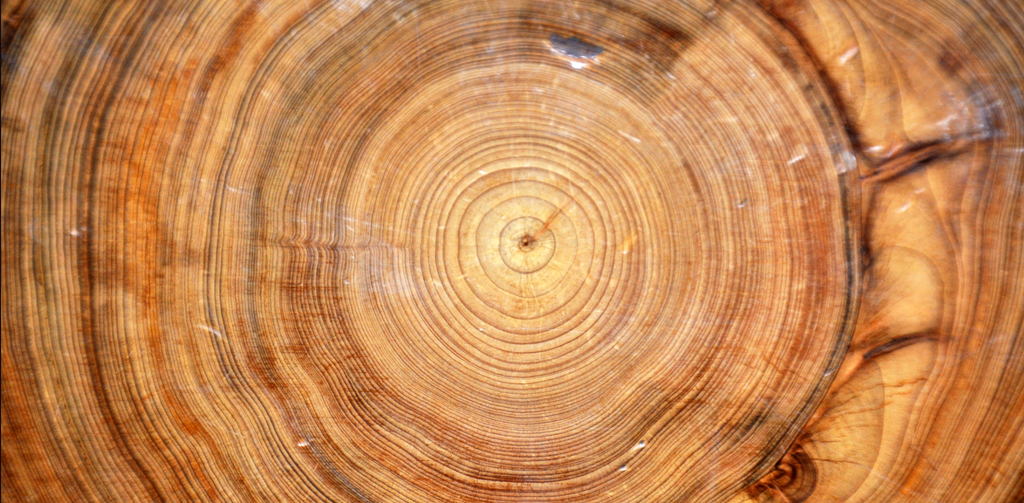
Now, I am entering another as part of the leading generation of my family. With the passing of both of my parents, I am now the outer ring of the tree. Careers work the same way. My executive season gave way four years ago to a season in which I was more intensely technical than I had been in many years. That season was preparation for the current one in which machines are supremely capable of reproducing my technical work while also being incapable of applying judgment and experience to doing it well and appropriately. It’s an interesting time to be a grey-beard.
But what does this season mean for those who don’t have my experience? I was watching a documentary in which Glenn Frey said he finally learned how to write music by listening to Jackson Browne, who lived below, bang out a song repetitively dozens of times each day until it was muscle memory. Frey’s realization: “It’s elbow grease.”
That’s how writing code has been for me. Iterating over and over. Fixing bugs, optimizing, shipping, doing it again. Elbow grease. The repetition helped me learn how to identify when the code was wrong, even when it worked. Here, at the early stages of AI, I wonder if programming will go the way of shoeing horses – a cool thing to know how to do if you’re into horses, but not really necessary for daily life. What would I have done if I had come of age in this emerging season? What is my responsibility to cut the trails for those coming behind?
The Linux Foundation recently released information about the impact of AI on open-source maintainers. They are getting flooded by poor quality AI slop code. Many say AI is increasing the need for mentorship. The burden on maintainers is real and increasing. But what of its long term effect on open-source itself? Will open-source be necessary? Or closed-source? Or traditional software products?
That’s all incredibly hyperbolic, I know. At the same time, there were whole classes of careers, skills, and products that had existed for centuries that became unnecessary after the invention of the automobile. There are whole classes of them that came into being at the same time. My career was unheard of 100 years ago. We can’t discount the possibility that we could be at the edge of such a shift again.
The automobile also came with significant environmental and economic consequences, similar to what we’re seeing with AI today. It clearly increased pollution over the long term and has contributed to climate change. That said, the economic growth of the last half of the 20th Century may not have been possible without the ability to quickly distribute products at scale. I’m not certain those who constructed the first “horseless carriages” foresaw the extent to which they eventually transformed the world.
We could be in a similar place with AI. Perhaps the obvious inefficiency of current AI infrastructure will spur the innovations that could reduce its current impact. That could happen. Or we could end up with the kind of mixed bag we got with the automobile.
As I sit here winding down this post and this series, the leaves outside my window are putting on a fiery show. The season is literally changing, as is the season of my life, and just as the season of the industry I’ve worked in for over 30 years and written about for 20 is changing.
I used to tell early-career professionals “become an expert at something else and know how to apply geography to that.” I hope that advice can still hold as AI settles in.
